


You’ve seen the posts. Someone swapped the foam for a tiny daily tablet and their hairline came back. Oral minoxidil in Canada is real, and providers here do prescribe it. The part those posts leave out is that it isn’t authorized for hair at all, and in the one trial that put it head to head against the topical version, it didn’t win.
Key takeaways
- Minoxidil tablets are authorized in Canada as a treatment for severe high blood pressure. Prescribing low doses for pattern hair loss is off-label, which is permitted but means Health Canada has not reviewed that use.
- In the only randomized head-to-head trial in men, 5 mg of oral minoxidil once daily was not superior to 5% topical minoxidil twice daily over 24 weeks.
- The oral form did come out ahead on the crown in photographic analysis, by 24%, but not on the frontal scalp.
- Hypertrichosis, meaning hair growing where you didn’t ask for it, is the most common side effect. It affected 15.1% of 1,404 patients in the largest safety cohort published.
- Systemic effects are uncommon but real. In that same cohort: lightheadedness 1.7%, fluid retention 1.3%, fast heart rate 0.9%.
What oral minoxidil actually is
Minoxidil is a potassium channel opener. It relaxes and widens small blood vessels, which is why it was developed as a blood pressure drug in the first place.
The hair effect was found by accident. Patients taking it for hypertension grew hair in places they hadn’t expected, and the topical version followed from that observation.
Both forms contain the same molecule. The difference is where it goes. Topical minoxidil is applied to the scalp and roughly 1% to 2% of it is absorbed into the bloodstream. A tablet delivers the drug systemically, which is why it reaches follicles the foam may have missed, and also why the side effects are different in kind rather than just in degree.
 Oral minoxidil Canada: what is authorized and what is prescribed
This is the part most articles skip, and it changes how you should read everything else.
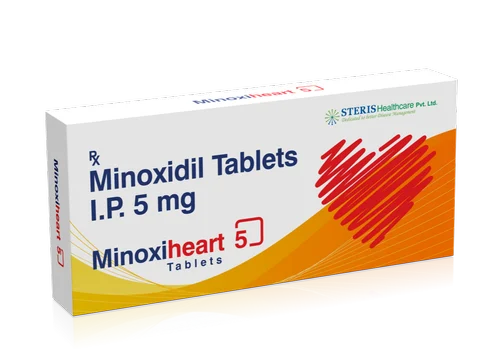
Minoxidil tablets are authorized in Canada under the brand LONITEN, in 2.5 mg and 10 mg strengths, as a treatment for severe hypertension that has not responded to other medications. That is the entire authorized indication.
There is no oral minoxidil product authorized in Canada for hair. When a provider prescribes 1.25 mg or 2.5 mg daily for pattern hair loss, they are prescribing off-label. Off-label prescribing is legal, common, and often appropriate. It also means the dose, the monitoring schedule and the safety data for that use come from published research rather than from a Health Canada review.
Topical minoxidil is a different story. It is available without a prescription in 2% and 5% formulations and is the first-line pharmacologic option most guidelines start with.
Oral minoxidil vs topical: what the trial found
In 2024, researchers published the first randomized clinical trial comparing the two directly in men with androgenetic alopecia. Ninety participants were randomized to either 5 mg of oral minoxidil daily with a placebo solution, or 5% topical minoxidil twice daily with a placebo tablet, for 24 weeks.
The result: oral minoxidil did not demonstrate superiority over topical minoxidil.
On photographic analysis it was better on the vertex, the crown area, by 24%. On the frontal scalp the difference was 12% and did not reach statistical significance. The authors’ own framing was that the two had similar efficacy, and that the oral form is an option for people who prefer a tablet or cannot tolerate a topical.
That is a more useful finding than it sounds. It means the choice is mostly about tolerability, adherence and what your provider is comfortable monitoring, not about one being clearly stronger.
| Oral minoxidil | Topical minoxidil | |
|---|---|---|
| How it is used | One tablet daily | Solution or foam, twice daily |
| Canadian status | Tablets authorized as an antihypertensive. Use for hair is off-label. | Available without a prescription in 2% and 5% |
| 24-week head-to-head result | Not superior overall. Better on the crown in photographic analysis. | Comparable overall |
| Most common side effect | Hypertrichosis, 15.1% in a 1,404-patient cohort | Scalp irritation and contact dermatitis |
| Main practical drawback | Systemic exposure, needs prescribing and monitoring | Twice-daily application, texture on the hair, adherence |
| Absorption | Absorbed fully through the gut | Roughly 1% to 2% enters the bloodstream |
Does a higher dose do more?
Somewhat, and it costs you something.
A 2022 systematic review with meta-regression looked at how outcomes changed with dose in people with androgenetic alopecia. Every additional 1 mg per day was associated, at six months, with more hair diameter, more total hair density and more terminal hair density.
The same analysis found that each extra 1 mg was also associated with a 17.9% higher risk of hypertrichosis and a 4.8% higher risk of cardiovascular adverse events.
So the dose response runs in both directions at once. This is exactly why the dose is a clinical decision rather than a personal preference, and why the doses used for hair sit well below the doses used for blood pressure.
Side effects, with actual numbers
The largest published safety study followed 1,404 patients taking low-dose oral minoxidil for hair loss.
- Hypertrichosis: 15.1%. This led 14 patients, 0.5% of the total, to stop treatment.
- Lightheadedness: 1.7%
- Fluid retention: 1.3%
- Fast heart rate: 0.9%
- Headache: 0.4%
- Swelling around the eyes: 0.3%
- Insomnia: 0.2%
Across all systemic effects, 29 patients, 1.2%, discontinued.
Two things are worth reading out of that. The overall discontinuation rate is low. And hypertrichosis is not a rare inconvenience, it is the single most likely thing to happen, and it happens on the face, arms and body rather than only where you want it. In the 2024 head-to-head trial, at the higher 5 mg dose, it affected 49% of the oral group.
Shedding in the first weeks is also common with either form. It reflects follicles cycling, not treatment failure, though that is cold comfort at week three.
 Safety and who should speak with a healthcare provider first
Oral minoxidil affects the cardiovascular system. It is not a cosmetic product taken by another route.
Speak with a licensed healthcare provider before considering it if you:
- have any heart condition, including heart failure, angina, a previous heart attack, or a heart rhythm problem
- have low blood pressure, or take medication for blood pressure
- have kidney disease or are on dialysis
- have a history of fluid retention or unexplained swelling
- are pregnant, planning a pregnancy, or breastfeeding. Oral minoxidil is not recommended in pregnancy, and hypertrichosis has been reported in newborns after exposure during pregnancy.
- take any other prescription medication
Get medical help right away for chest pain, a fast or irregular heartbeat, rapid weight gain, or swelling of the hands, feet or face.
Baseline and follow-up monitoring, including blood pressure and heart rate, is normal practice when this is prescribed for hair. If a service offers it without any of that, treat the absence as information.
Frequently asked questions
Is oral minoxidil better than topical?
Not according to the only randomized head-to-head trial in men. Over 24 weeks, 5 mg daily oral minoxidil was not superior to 5% topical twice daily. It was better on the crown in photographic analysis. Most guidelines still start with topical, with the oral form considered when topical is not tolerated or not working.
Does oral minoxidil work?
Yes, there is reasonable evidence it improves hair density and diameter in androgenetic alopecia, and effects increase with dose. The evidence base is smaller and more recent than for topical minoxidil, and much of it comes from observational studies rather than large randomized trials.
Is oral minoxidil safe?
At low doses it is generally well tolerated, with about 1.2% of 1,404 patients stopping because of systemic effects. It is not risk free. It affects blood pressure and heart rate, hypertrichosis is common, and it requires prescribing and monitoring by a licensed provider.
Can you take oral and topical minoxidil together?
Some providers do combine them, but there is little published evidence on the combination and the total systemic exposure goes up. This is a decision for the clinician prescribing it, not something to add on your own. Ask before layering anything on top of an existing routine.
Can women take oral minoxidil?
Low-dose oral minoxidil has been studied in female pattern hair loss and is prescribed off-label for it. Hypertrichosis on the face tends to be more of a concern. It is not recommended during pregnancy or breastfeeding. A provider can assess whether it is appropriate.
How do you get oral minoxidil in Canada?
Only with a prescription, following an assessment by a licensed provider. There is no authorized over-the-counter oral form. Topical minoxidil, by contrast, can be bought without a prescription.
The bottom line
Oral minoxidil is a legitimate option with real evidence behind it, and it is not the upgrade the internet describes. In the one trial that tested it directly against topical minoxidil, it matched rather than beat it, and it brought hypertrichosis along for the ride. It earns its place when topical isn’t working or isn’t being used consistently, which is more often the real problem.
If you’re deciding what to do next, look at MyRocky’s minoxidil options, see how finasteride and minoxidil are used together, browse hair loss treatment options, or speak with a licensed provider about what fits your situation.
References
- Penha MA, Miot HA, Kasprzak M, Müller Ramos P. Oral minoxidil vs topical minoxidil for male androgenetic alopecia: a randomized clinical trial. JAMA Dermatology, 2024;160(6):600-605. https://pmc.ncbi.nlm.nih.gov/articles/PMC11007651/
- Vañó-Galván S, Pirmez R, Hermosa-Gelbard A, et al. Safety of low-dose oral minoxidil for hair loss: a multicenter study of 1404 patients. Journal of the American Academy of Dermatology, 2021. https://pubmed.ncbi.nlm.nih.gov/33639244/
- Gupta AK, Hall DC, Talukder M, Bamimore MA. There is a positive dose-dependent association between low-dose oral minoxidil and its efficacy for androgenetic alopecia: findings from a systematic review with meta-regression analyses. 2022. https://www.ncbi.nlm.nih.gov/pmc/articles/PMC9485924/
- Health Canada. LONITEN (minoxidil tablets USP) product information. Drug and Health Product Register. https://dhpp.hpfb-dgpsa.ca/dhpp/resource/4011
Disclaimer: This article is intended for informational purposes only and is not a substitute for professional medical advice, diagnosis, or treatment. Always consult your healthcare provider with any questions about a medical condition or treatment.
Editorial Standards: At Rocky Health, we’ve made it our mission to support men and women with trustworthy, easy-to-understand medical and health information online. Read more about our editorial standards here.