


You’ve probably seen a before-and-after photo captioned “Ozempic face” and assumed the drug did something to the face. Here’s the part those posts skip. The term came from social media, not medicine, and the evidence points at the weight rather than the molecule.
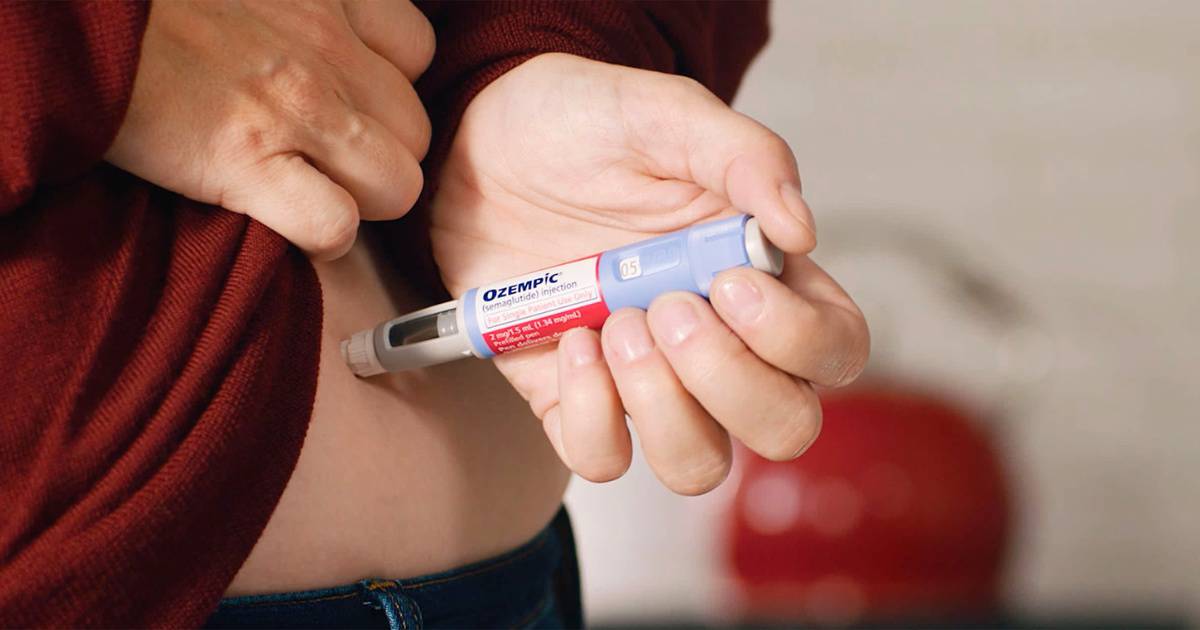
One fact belongs up front. Ozempic holds no weight-management authorization in Canada. Health Canada authorizes it for type 2 diabetes, plus cardiovascular and kidney outcomes. The semaglutide product authorized here for chronic weight management is Wegovy.
Key takeaways
- “Ozempic face” is a social media label, not a medical term, and appears in no Health Canada monograph.
- One imaging study has measured it. Median midfacial volume fell 9.0%, and regression estimated about 7% of facial volume lost per 10 kg (n=20).
- A 2026 systematic review concluded this is weight-loss deflation on top of existing anatomy and aging, not a drug effect on the face.
- Across 20 randomized trials and 15,782 participants, lean mass made up 35.2% of weight lost on semaglutide and 26.2% on dieting. That difference was not significant.
- Lifestyle plus resistance training had the lowest figure measured, at 17.5%.
What “Ozempic face” actually means
“Ozempic face” describes hollowing and sagging that becomes visible during substantial weight loss. It is a public nickname, not a diagnosis. Cleveland Clinic endocrinologist Vinni Makin, MD, states it is not a medical term, and that clinicians do not use it.
The literature warns that the name itself misleads. Yoo, in a 2026 review in Aesthetic Surgery Journal, screened 958 records and included 46. The term “can imply a drug-specific adverse effect,” the review concluded, “although similar changes occur after other forms of substantial weight loss.”
The Canadian regulatory detail matters, because readers act on it. Health Canada’s chronic weight management authorization in this family covers semaglutide 2.4 mg. It applies to adults with a body mass index of 30 or more, or 27 or more alongside a weight-related condition such as hypertension, dyslipidemia or sleep apnea. Here is what the Canadian eligibility criteria require. Oral semaglutide branded for weight management is not listed in Health Canada’s Drug Product Database as of October 2026.
What causes “Ozempic face”?
Fat loss in the face, driven by whole-body weight loss, landing on whatever aging and anatomy were already there.
Facial fat is not one even layer. Rohrich and Pessa, from thirty hemifacial cadaver dissections in 2007, showed it sits in discrete compartments. The face, they concluded, “does not age as a confluent or composite mass.” That is why loss shows as specific hollows.
Only one study has quantified it. Sharma and colleagues, in Otolaryngology-Head and Neck Surgery in 2025, reviewed imaging before and after GLP-1 prescription in 20 patients at one academic centre. Mean weight loss was 11.0 kg. Median total midfacial volume fell 9.0%, and regression estimated about 7% of facial volume lost per 10 kg (n=20). Read it as a direction, not a precise number. It is retrospective and has no comparison group losing weight another way.
No drug-specific mechanism is established. Yoo’s review concluded that “current evidence favors weight-loss-associated deflation superimposed on baseline anatomy and aging.” Skeletal remodelling, muscle loss and reduced skin elasticity have all been proposed as contributors. Those remain hypotheses, not findings.
Then there is the rate question, which most articles get wrong. Cleveland Clinic says the faster the loss, the more likely the change. That is clinician opinion. Yoo’s review states that the independent effect of weight-loss rate remains uncertain. Treat slower loss as sensible rather than proven.
No prevalence figure exists. This literature has no denominator, so nobody can say what share of people see visible facial change.
What does “Ozempic face” look like?
Reported changes are hollowing at the cheeks and temples, looser skin along the jaw and neck, more visible folds, and looking older than before. Studies after bariatric surgery describe the same deflation and increased apparent age. In a survey of 1,226 participants, reports rose with the percentage of weight lost.

How to manage “Ozempic face” while losing weight
Here the evidence is genuinely useful, and the honest answer is counterintuitive.
The largest relevant analysis is a 2026 meta-analysis by Eisa and Barood, covering 20 randomized trials and 15,782 participants, all using DXA or MRI scanning. It reports how much of the weight lost came off as lean mass, meaning muscle and other non-fat tissue.
| Approach | Share of weight lost that was lean mass | Note |
|---|---|---|
| Lifestyle plus resistance training | 17.5% (95% CI 14.2 to 20.8) | From lifestyle trials, not GLP-1 trials |
| Tirzepatide | 25.4% | Pooled estimate |
| Lifestyle intervention alone | 26.2% (95% CI 24.1 to 28.3) | The drug comparison group |
| Liraglutide | 26.8% | Pooled estimate |
| Semaglutide | 35.2% (95% CI 31.5 to 38.9) | Not significantly different, p=0.42 |
Read the last two rows together. On semaglutide, the share of weight lost as lean mass was statistically comparable to dieting. Resistance training roughly halved it. Heterogeneity was substantial, with an I-squared of 68%.
On protein, one GLP-1-specific figure exists. A global working group, writing in Obesity Pillars in 2025, recommended more than 1.2 g per kg of body weight daily, spread across meals, with aerobic activity and resistance training. That is an expert consensus recommendation, not a clinical practice guideline.
Higher targets circulate widely, and their source needs flagging. The International Society of Sports Nutrition position stand cites 1.6 to 2.2 g/kg/day with resistance training, but states that it does not address GLP-1 receptor agonists. That figure comes from a different population. No randomized trial has set an optimal protein target for people on GLP-1 therapy.
No study has linked protein intake to facial appearance. This evidence is about whole-body lean mass, so applying it to the face is an inference.
Cleveland Clinic also suggests slower loss, daily sunscreen and consistent skin care. The rate item there is clinician judgment, not a trial result. If you are still deciding, read how this class of injection works.
Is “Ozempic face” reversible?
No study has measured it. No randomized trial, cohort study or imaging study has tracked facial volume after weight regain or after stopping treatment, so any specific reversal figure you read online is invented.
What exists is clinical observation. Cleveland Clinic states the change does not fade with time on its own. Regaining weight may make the face look fuller again, and where weight loss is maintained it will likely persist. Cleveland Clinic also states that facial volume loss carries no negative health effects, and needs no treatment unless the person wants it addressed.
Management options exist, and a provider can walk through them. Aesthetic treatment evidence is limited and largely uncontrolled, in Yoo’s words, which is why no procedure is named here.
What the research actually shows
Two grades of evidence sit behind this topic. The facial imaging evidence is one retrospective study of 20 patients, giving a direction and a rough magnitude, about 7% of facial volume per 10 kg lost (n=20).
The body composition evidence is stronger, and still mixed. The widely quoted figures, lean mass falling 9.7% while rising 3.0 percentage points as a share of body mass, come from a DXA substudy of STEP 1 with n=140. That was a conference abstract, industry funded, not a peer-reviewed paper. An independent 2026 review of 35 randomized trials put the median share of weight lost as lean mass at 28.3% in incretin groups, and no study in it reported objective physical function outcomes. The clean way to hold it: absolute lean mass falls, while lean mass as a share of body mass rises.
Safety and who should speak with a healthcare provider first
These are prescription medications in Canada, so a provider assesses suitability first.
Semaglutide labelling carries a serious warning about thyroid C-cell tumours. In rodents, semaglutide caused dose-dependent and treatment-duration-dependent thyroid C-cell tumours. That finding is preclinical, and the labelling states its human relevance has not been determined. It is unknown whether semaglutide causes these tumours, including medullary thyroid carcinoma, in people. It is contraindicated in anyone with a personal or family history of medullary thyroid carcinoma, or with Multiple Endocrine Neoplasia type 2.
Other reported warnings and precautions include acute pancreatitis, gallbladder disease, hypoglycemia, acute kidney injury, severe gastrointestinal reactions, hypersensitivity, worsening diabetic retinopathy, increased heart rate, and pulmonary aspiration under general anesthesia or deep sedation. Tell your surgical or endoscopy team you are on this medication.
Gastrointestinal effects are common. In the pooled trial population behind the 2.4 mg dose (N=2,116 against 1,261 on placebo), nausea was reported by 44% against 16%, diarrhea by 30% against 16%, and vomiting by 24% against 6%. In the 68-week STEP 1 trial of 1,961 adults, 4.5% stopped because of gastrointestinal events, against 0.8% on placebo. Those reactions were typically transient and mild to moderate.
Speak with a healthcare provider before starting treatment in this class if:
- you have a personal or family history of medullary thyroid carcinoma, or Multiple Endocrine Neoplasia syndrome type 2
- you have had pancreatitis, gallbladder disease or kidney problems
- you have type 2 diabetes, particularly with diabetic retinopathy
- you are pregnant, planning a pregnancy, or breastfeeding
- you have surgery or a procedure under sedation coming up
If you notice facial changes, persistent vomiting or severe abdominal pain, speak with your provider rather than adjusting the dose yourself.
Frequently asked questions
What is “Ozempic face”?
“Ozempic face” is a colloquial term from social media for the hollowing and loose skin that can become visible during substantial weight loss. It is not a diagnosis and appears in no approved product labelling. Similar changes follow large weight loss from any cause.
How do you avoid “Ozempic face”?
The usable evidence is about whole-body lean mass, not the face. In a meta-analysis of 20 trials and 15,782 participants, resistance training plus lifestyle gave the lowest share of weight lost as lean mass, 17.5%, against 26.2% for dieting. A 2025 consensus recommends protein above 1.2 g/kg/day.
What does “Ozempic face” look like?
Hollowing at the cheeks and temples, looser skin along the jaw and neck, more visible folds, and looking older than before. In the one imaging study, median midfacial volume fell 9.0% (n=20). Reports rise with the percentage of weight lost.
How do you prevent “Ozempic face”?
Nothing has been shown in a trial to prevent facial volume change. Resistance training and adequate protein are the tested levers for preserving lean mass overall. Clinicians also suggest slower loss, though a 2026 systematic review calls the independent effect of weight-loss rate uncertain.
Is “Ozempic face” reversible?
No trial, cohort study or imaging study has measured facial volume recovery after weight regain or after stopping treatment, so no reliable figure exists. Clinical commentary suggests it does not fade on its own, that regaining weight may restore some fullness, and that it persists where loss holds.
Does “Ozempic face” go away?
Not by itself, based on current clinical commentary. Cleveland Clinic states the change will not fade with time, and will likely persist where weight loss is maintained. It also notes that facial volume loss carries no health risk, and needs no treatment unless someone asks for it.
 The bottom line
“Ozempic face” names a real change with the wrong cause attached. The evidence points to facial fat loss driven by whole-body weight loss, measured in one study of 20 patients. Resistance training and adequate protein are the tested levers.
If facial change is the thing holding you back, raise it with a clinician rather than settling it from search results. See what medically supervised weight management involves at MyRocky, or read how an assessment with a licensed Canadian provider works.
References
- Yoo KH. Glucagon-Like Peptide-1 Receptor Agonist-Associated Facial Changes. Aesthetic Surgery Journal, 2026. https://pubmed.ncbi.nlm.nih.gov/42872378/
- Sharma RK, Vittetoe KL, Barna AJ, et al. Radiographic Midfacial Volume Changes in Patients on GLP-1 Agonists. Otolaryngology-Head and Neck Surgery, 2025. https://pubmed.ncbi.nlm.nih.gov/40407186/
- Eisa N, Barood O. Lean Mass Changes With Incretin Therapy Versus Lifestyle Intervention: A Systematic Review and Meta-Analysis of Randomised Controlled Trials. Diabetes, Obesity and Metabolism, 2026;28:4818-4827. https://pubmed.ncbi.nlm.nih.gov/41877354/
- Cleveland Clinic. “Ozempic Face”: What It Is and How To Avoid It. Cleveland Clinic Health Essentials, 5 March 2025. https://health.clevelandclinic.org/ozempic-face
- Noronha JC, Van Gaal LF, Neeland IJ, Fitch A, et al. Optimizing GLP-1 therapies for obesity and diabetes management. Obesity Pillars, 2025;16:100222. https://pubmed.ncbi.nlm.nih.gov/41322078/
Disclaimer: This article is intended for informational purposes only and is not a substitute for professional medical advice, diagnosis, or treatment. Always consult your healthcare provider with any questions about a medical condition or treatment.
Editorial Standards: At Rocky Health, we’ve made it our mission to support men and women with trustworthy, easy-to-understand medical and health information online. Read more about our editorial standards here.