


If you have been reading about tirzepatide in Canada and come away thinking there are two competing drugs, there aren’t. There is one molecule sold under two brand names, authorized for two different uses. Once you see that, most of the confusion in the search results resolves itself.
Key takeaways
- Tirzepatide is a single active ingredient. Health Canada has authorized it under two separate brand names, each for different uses.
- One product is authorized for chronic weight management and for obstructive sleep apnea in adults with obesity. The other is authorized for type 2 diabetes.
- Tirzepatide activates two receptors, GIP and GLP-1, rather than the single GLP-1 receptor that semaglutide acts on.
- In SURMOUNT-5, the first published head-to-head trial, tirzepatide produced average weight reduction of 20.2 percent over 72 weeks compared with 13.7 percent for semaglutide.
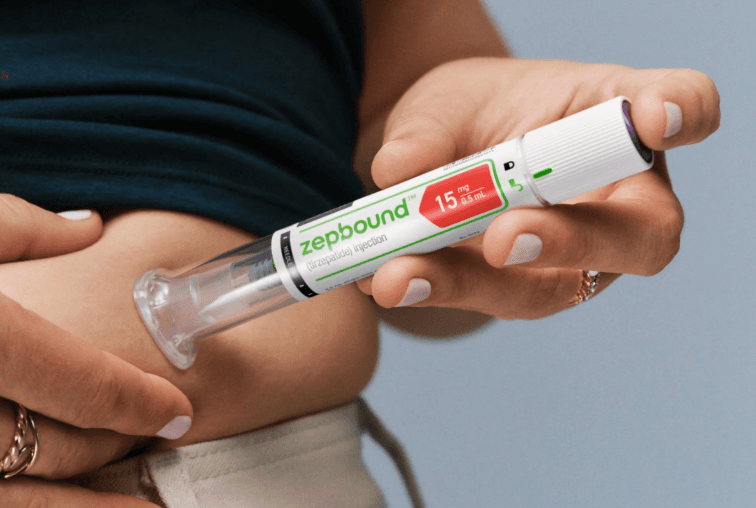
- Both products are given as a once-weekly injection, and the dosing schedule is the same regardless of which indication it is prescribed for.
- Gastrointestinal side effects are the most common. Which product you are prescribed depends on your diagnosis, not on preference.
What tirzepatide is and how it differs from other options
Tirzepatide is a once-weekly injectable medication that activates two hormone receptors: the glucagon-like peptide-1 receptor, known as GLP-1, and the glucose-dependent insulinotropic polypeptide receptor, known as GIP. Both are gut hormone receptors involved in blood sugar regulation, appetite, and how quickly the stomach empties.
That dual action is the main structural difference from semaglutide, which acts on the GLP-1 receptor alone. GIP and GLP-1 receptors are laid out differently in the brain regions that regulate food intake. Researchers have suggested that activating both is what produces the larger effect seen in trials. That remains a theory, not a settled explanation.
In practice, people describe the effect the same way they describe other medications in this family. Fullness arrives earlier and lasts longer, and the mental preoccupation with food quiets down.
Tirzepatide in Canada: the two products explained
This is the part that trips people up, so it is worth being precise.
| Weight management product | Diabetes product | |
|---|---|---|
| Active ingredient | Tirzepatide | Tirzepatide |
| Authorized in Canada for | Chronic weight management; obstructive sleep apnea in adults with obesity | Type 2 diabetes |
| First authorized | May 2025 | 2022 |
| How it is given | Once-weekly injection | Once-weekly injection |
| Dosing schedule | Identical | Identical |
The molecule is the same. The dosing schedule is the same. What differs is the indication Health Canada reviewed and authorized. That changes the labelling and the evidence package behind it. It also changes which product a clinician can prescribe for your situation.
Your diagnosis determines which one applies. Someone with type 2 diabetes and someone seeking weight management are not choosing between two options on a shelf. They are being assessed for two different authorized uses of the same drug.
There is one more wrinkle worth knowing. In some countries, tirzepatide is sold under a single brand name for both uses. In Canada and the United States, the two indications carry different brand names. That is why international articles and forum posts often appear to contradict Canadian pharmacy information. They are describing different markets.

What the trials actually found
Tirzepatide has the largest average weight reduction of any medication currently authorized for weight management in Canada. Here is the evidence that claim rests on.
SURMOUNT-1 was published in the New England Journal of Medicine in 2022. It enrolled 2,539 adults who had obesity, or overweight plus at least one weight-related condition, and no type 2 diabetes. Over 72 weeks, average weight reduction at the 15 mg dose was about 21 percent, compared with about 3 percent on placebo. Roughly 96 percent of participants on the 10 mg and 15 mg doses lost at least 5 percent of their body weight.
SURMOUNT-5, published in 2025, is the one people actually want. It was the first published head-to-head comparison of tirzepatide and semaglutide. It enrolled 751 adults with obesity and without diabetes, randomized to the maximum tolerated dose of either drug, with behavioural support, for 72 weeks.
| Outcome at 72 weeks | Tirzepatide | Semaglutide |
|---|---|---|
| Average weight reduction | 20.2 percent | 13.7 percent |
| Average waist circumference change | 18.4 cm reduction | 13.0 cm reduction |
| Lost at least 30 percent of body weight | 19.7 percent of participants | 6.9 percent of participants |
| Stopped treatment due to GI side effects | 2.7 percent | 5.6 percent |
Read that table carefully, because the honest interpretation is narrower than the headline.
The trial was open-label, meaning participants and investigators knew which drug was being given. That is a real limitation for outcomes involving appetite and behaviour. Both drugs produced substantial results. Semaglutide’s 13.7 percent is a large effect by any historical standard. The trial authors also noted that weight loss ran roughly 6 percent lower in men than in women, in both groups. That may explain why both figures came in below earlier trials, which enrolled fewer men.
There is also a separate indication worth noting. In June 2026, Health Canada authorized tirzepatide for moderate to severe obstructive sleep apnea in adults with obesity, the first medication authorized in Canada for that use. In the trials supporting it, adults not using PAP therapy had 25 fewer breathing interruptions per hour compared with 5 fewer on placebo.
For a closer look at how the diabetes-authorized tirzepatide product compares with semaglutide products, see our comparison of Mounjaro and Ozempic in Canada.
Side effects and who should not take it
The most common side effects are gastrointestinal: nausea, diarrhea, vomiting, constipation, and abdominal pain. In trials, most were mild to moderate and occurred while the dose was being increased rather than once a stable dose was reached.
Less common but more serious reported risks for this class include pancreatitis and gallbladder problems. Tirzepatide carries a warning regarding thyroid C-cell tumours, based on rodent studies. Whether that risk applies to humans has not been established. It is still why a personal or family history of medullary thyroid carcinoma, or of multiple endocrine neoplasia syndrome type 2, matters to the assessment.
Tirzepatide is not appropriate for everyone. A clinician needs to review your medical history and current medications first. That includes any history of pancreatitis, gallbladder disease, thyroid cancer, severe gastrointestinal disease, or diabetic retinopathy. It also includes pregnancy plans. If you are experiencing symptoms you think might warrant treatment, speak with a healthcare provider about whether it may be right for you.
Weight also tends to return after treatment stops. In the semaglutide trials, participants regained about two thirds of lost weight within a year of stopping. The pattern is expected to be similar across this class. Plan for a long-term approach rather than a short course.
Still deciding whether medication is the right step? Our guide to considering weight loss medication in Canada covers that decision. Your first 90 days on weight loss medication covers what the early months tend to feel like.
Frequently asked questions
Is tirzepatide available in Canada?
Yes. Health Canada has authorized tirzepatide under two brand names, one for chronic weight management and obstructive sleep apnea with obesity, and one for type 2 diabetes. Both are prescription-only and both are given as a once-weekly injection.
Is tirzepatide better than semaglutide?
In SURMOUNT-5, the only published head-to-head trial, tirzepatide produced greater average weight reduction over 72 weeks. Both are effective. Which one suits you depends on your health history, how well you tolerate it, coverage, and cost. Treat the comparison as a starting point for a conversation with a clinician, not an answer on its own.
What is the difference between the two tirzepatide products in Canada?
The active ingredient and the dosing schedule are the same. The difference is what Health Canada authorized each one for. One is authorized for chronic weight management and for obstructive sleep apnea in adults with obesity. The other is authorized for type 2 diabetes.
How much does tirzepatide cost in Canada?
Cost varies by product, dose, and pharmacy. Provincial drug plans generally cover this class for type 2 diabetes and generally do not cover it for weight management, and private coverage is inconsistent. Ask for the price of the specific product and dose you are prescribed before starting.
Does compounded tirzepatide work the same way?
Health Canada has not authorized compounded versions of GLP-1 receptor agonists, and considers unauthorized preparation of these products a manufacturing activity rather than compounding. Products that have not been through Health Canada review have not been assessed for safety, efficacy, or quality.
The bottom line
Tirzepatide is one molecule with two authorized Canadian products, separated by indication rather than by formula. It has produced the largest average weight reduction of any weight management medication authorized in Canada. Gastrointestinal side effects are the most common trade-off. And weight is likely to return if treatment stops.
To find out whether it is appropriate for you, start an online assessment with MyRocky and speak with a licensed Canadian healthcare provider.
References
- Jastreboff AM, Aronne LJ, Ahmad NN, et al. Tirzepatide once weekly for the treatment of obesity. N Engl J Med. 2022;387(3):205-216. https://www.nejm.org/doi/full/10.1056/NEJMoa2206038
- Aronne LJ, Horn DB, le Roux CW, et al. Tirzepatide as compared with semaglutide for the treatment of obesity. N Engl J Med. 2025. https://www.nejm.org/doi/full/10.1056/NEJMoa2416394
- Wharton S, Lau DCW, Vallis M, et al. Pharmacotherapy for obesity management in adults. Canadian Adult Obesity Clinical Practice Guidelines, 2025 update. Obesity Canada. https://obesitycanada.ca/wp-content/uploads/2025/08/11-Canadian-Adult-Obesity-CPG-Pharmacotherapy-2025-update.pdf
Disclaimer: This article is intended for informational purposes only and is not a substitute for professional medical advice, diagnosis, or treatment. Always consult your healthcare provider with any questions about a medical condition or treatment.
Editorial Standards: At Rocky Health, we’ve made it our mission to support men and women with trustworthy, easy-to-understand medical and health information online. Read more about our editorial standards here.