


The pitch is reasonable on its face. Take a smaller amount, spend less, feel less rough, keep most of the benefit. Before you weigh that up, it is worth knowing what GLP-1 microdosing runs on in Canada, and what the manufacturers already wrote about those doses in their own product monographs.
Key takeaways
- Microdosing has no agreed definition. It can mean staying on a starting dose, going below the authorized range, spacing doses further apart, or drawing a custom amount from a vial.
- No GLP-1 receptor agonist is authorized in Canada at a microdose. It is not an approved dosing approach for any product in the class.
- The monographs already say the low doses are not the working doses. Canadian labelling describes the lowest injectable semaglutide dose as not a therapeutic dose, and the lowest oral tablet strengths as intended for starting treatment rather than for glycemic control.
- No randomized trial has compared a microdosing regimen against an authorized one.
- Health Canada has stated that unauthorized compounding of these products is not permitted, and has warned Canadians about unauthorized and counterfeit GLP-1 products sold here in stores and online.
What the word actually means, which is the first problem
There is no single definition, and that matters more than it sounds.
To one seller it means sitting on the initiation dose indefinitely instead of stepping up. To another it means an amount below the lowest authorized maintenance dose. To another it means injecting less frequently than the schedule specifies. To another it means measuring a custom volume out of a multi-dose vial, often counted in “units” rather than milligrams.
Those are four separate practices. They differ in whether anything happens at all and in how easy it is to get the amount wrong. A term that stretches across all four is a category invented for selling, not a protocol anyone studied.
What Canadian labelling says about the low doses
These medicines are stepped up on purpose. The low rungs exist so the body can adapt to the gastrointestinal effects before reaching an amount that does the work, and the monographs are unusually direct about it.
| Product type | What the Canadian labelling says about the lowest dose | Authorized maintenance |
|---|---|---|
| Injectable semaglutide, weekly | The 0.25 mg starting dose is stated to be not a therapeutic dose | 0.5 mg, 1 mg or 2 mg once weekly |
| Oral semaglutide tablets, daily | The lowest strengths are for treatment initiation and are not intended for glycemic control | 4 mg or 9 mg daily, or 7 mg or 14 mg on the initial formulation |
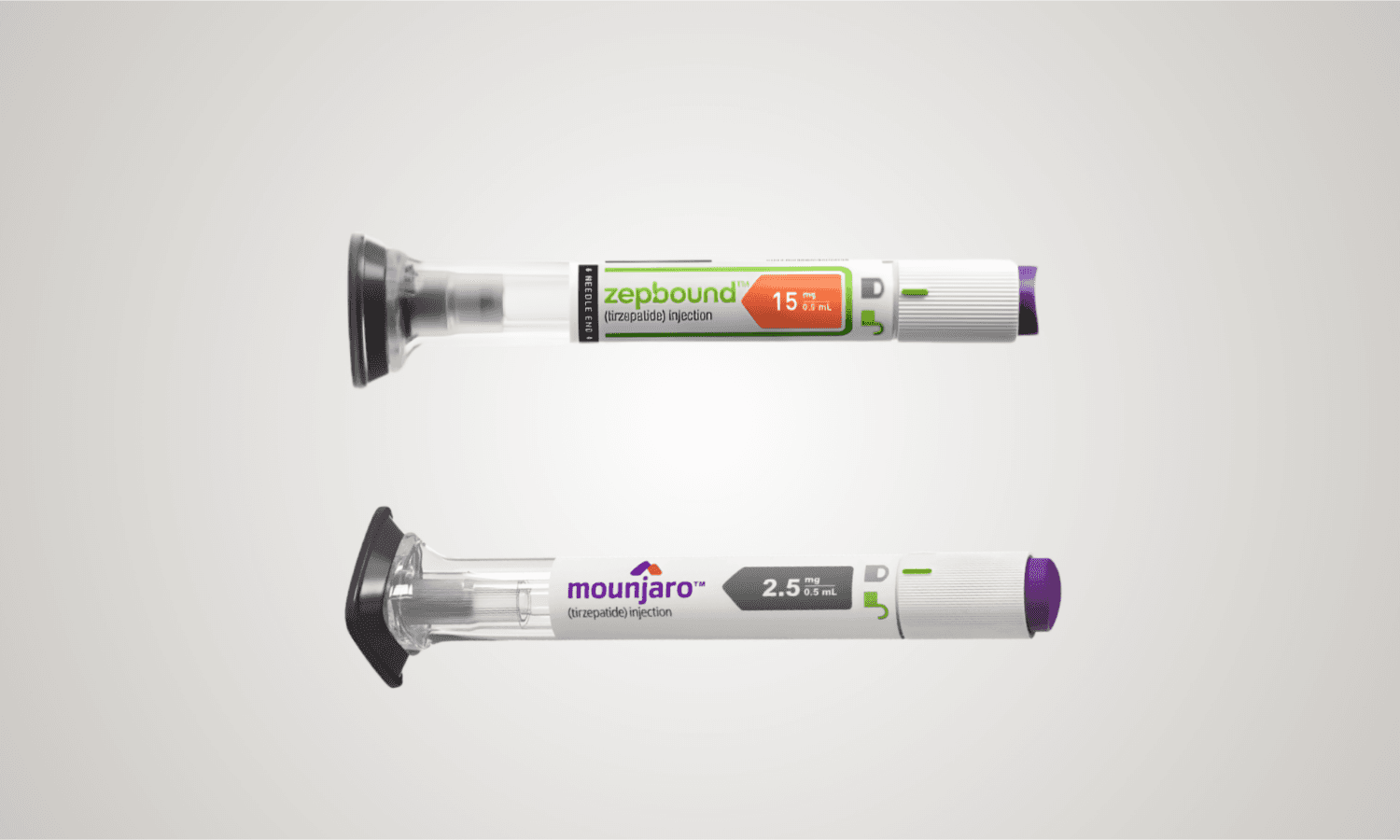
| Weekly tirzepatide | The lowest strength is a four-week starting step rather than a maintenance dose | Stepped upward in 2.5 mg increments to the authorized range |
That column is doing something specific. A program that keeps someone at or below the starting dose is selling the step the manufacturer labelled as the one that does not carry the effect.

Does microdosing a GLP-1 work?
Nobody has tested it, and that absence is the answer.
No randomized controlled trial has put a microdosing regimen against an authorized regimen for weight, blood sugar or anything else. The trials behind the outcomes people have heard about escalated participants to maintenance doses and held them there for a year or longer. Those numbers belong to those doses.
Mechanistically, the effects of this class are dose-related. Less drug produces less effect. There is no published evidence of a threshold below the authorized range where the appetite and metabolic effects hold while the side effects fall away. That is a pleasant idea and it remains an idea.
Major academic centres reviewing the practice have reached the same conclusion: no standard dose, no agreed protocol, and no scientific evidence behind what is being marketed under the name.
The Canadian part: where these products actually come from
This is where Canada diverges from what you will read on American sites.
Microdosing programs almost always rely on compounded or unauthorized product rather than authorized medicine. In Canada that is not a grey area.
Health Canada has set out its position that unauthorized manufacturing of products sold as compounded GLP-1 receptor agonists is not permitted. The regulator considers these activities to be manufacturing rather than compounding, because most involve unauthorized active pharmaceutical ingredients and duplicate authorized products without an unmet therapeutic need. Health Canada has also raised concerns about products that mix GLP-1 ingredients with other actives without scientific justification.
Separately, Health Canada has issued a public advisory warning Canadians not to buy or use unauthorized or counterfeit GLP-1 products. It states that it has identified retailers in Canada selling them both in stores and online, and that some websites and social media advertisements misuse official Health Canada logos and display fake endorsements. Health Canada does not endorse health products and does not permit its logo to be used in health product advertising.
The advisory lists what can be wrong with an unauthorized product: too much active ingredient, too little, or none at all; unlisted, dangerous or unknown ingredients; contaminants including solvents, heavy metals, particles such as fibres, glass or plastic, and microbial contamination; incorrect labelling; and improper manufacturing or storage.
The practical check is simple. An authorized drug sold in Canada carries an eight-digit Drug Identification Number on the label. If there is no DIN, it has not been assessed by Health Canada for safety, effectiveness or quality.
There is an irony worth naming. The approach marketed as the careful, low-dose, sensible option is usually the one that removes the pre-filled pen, which exists so the dose is difficult to get wrong, and replaces it with a vial, a syringe and arithmetic you perform yourself.
When a lower dose is a legitimate clinical decision
None of this means everyone has to reach the top of the range. That is a different thing, and blurring the two is how the marketing works.
A prescriber may hold someone at a lower dose because side effects are not tolerable higher up, because the response at that dose is already sufficient, or for another reason specific to that person. That is individualized prescribing of an authorized product, with monitoring, using a device built to deliver the amount accurately.
The difference is not the number of milligrams. It is whether a licensed clinician chose it, whether the product carries a DIN, and whether anyone is following what happens next.

Side effects and who should speak with a healthcare provider first
Taking a smaller amount does not remove the risk profile of the class.
The most common effects of GLP-1 receptor agonists are gastrointestinal: nausea, vomiting, diarrhea, constipation and abdominal pain. Serious risks described in the labelling for this class include pancreatitis, gallbladder disease, dehydration and kidney injury, complications of diabetic retinopathy, and low blood sugar when combined with insulin or certain other diabetes medications. The labelling also carries a warning relating to thyroid C-cell tumours observed in rodents, and these products are contraindicated in people with a personal or family history of medullary thyroid carcinoma or with multiple endocrine neoplasia syndrome type 2.
If you are already using a compounded or unauthorized product, do not simply stop or change what you are doing on the basis of an article. Speak with a licensed healthcare provider and tell them exactly what you have been taking and how you have been measuring it.
Speak with a healthcare provider before starting any medication in this class if you:
- have a personal or family history of medullary thyroid carcinoma, or multiple endocrine neoplasia syndrome type 2
- have had pancreatitis or gallbladder disease
- have type 1 diabetes or a history of diabetic ketoacidosis
- have diabetic retinopathy
- have kidney or liver problems
- have a condition affecting how quickly the stomach empties
- are pregnant, planning a pregnancy, or breastfeeding
- take insulin or another medication that lowers blood sugar
Get medical help right away for severe or persistent abdominal pain that may spread to the back, with or without vomiting, or for signs of a serious allergic reaction.
Frequently asked questions
Does GLP-1 microdosing work?
No trial has tested it. The studies behind the published outcomes escalated participants to authorized maintenance doses and kept them there for a year or more, so those findings describe those doses. Academic centres reviewing the practice report no standard protocol and no scientific evidence supporting it.
Is microdosing authorized in Canada?
No. It is not an authorized dosing approach for any GLP-1 receptor agonist in Canada. The authorized regimens step upward to specified maintenance doses, and the monographs describe the lowest starting doses as not therapeutic.
Are compounded GLP-1 products legal in Canada?
Health Canada has stated that unauthorized manufacturing of products sold as compounded GLP-1 receptor agonists is not permitted, and considers most such activity to be manufacturing rather than compounding. It has also warned Canadians about unauthorized and counterfeit products being sold here.
Is a smaller dose gentler?
Side effects in this class are dose-related, so a smaller amount may produce less nausea. That does not make the practice safe. The contraindications still apply, and the larger hazard is that the product is usually unauthorized and measured by hand rather than delivered by a pre-filled pen.
My doctor keeps me on a low dose. Is that microdosing?
No. A clinician holding you at a lower dose of an authorized product, with monitoring, is individualized prescribing. Buying a smaller quantity of an unauthorized product online and dosing yourself is a different situation with different risks.
How do I know if a product is authorized in Canada?
Look for an eight-digit Drug Identification Number, or DIN, on the label, and buy only from a licensed pharmacy. A product without a DIN has not been assessed by Health Canada for safety, effectiveness or quality, whatever the website says.
The bottom line
Microdosing is a category built by sellers rather than a protocol found in any monograph or trial. The manufacturers already state that the lowest doses are not the working doses, nobody has compared a microdosing regimen against an authorized one, and in Canada most of what these programs run on is not authorized to be sold in the first place. A lower dose chosen by your prescriber is a real and reasonable thing. It is not the same as what is being advertised.
If you want to work out whether this class of medication is appropriate for you, see MyRocky’s semaglutide options, read our health guide for Canadians considering weight loss medication and the eligibility checklist, or speak with a licensed provider.
References
- Health Canada. Thinking about buying GLP-1 drugs? Beware of fake or unauthorized products. Public advisory, Recalls and safety alerts. https://recalls-rappels.canada.ca/en/alert-recall/thinking-about-buying-glp-1-drugs-ozempic-or-mounjaro-beware-fake-or-unauthorized
- Novo Nordisk Canada Inc. OZEMPIC (semaglutide injection) product monograph. https://www.novonordisk.ca/content/dam/nncorp/ca/en/products/ozempic-product-monograph.pdf
- Novo Nordisk Canada Inc. RYBELSUS (semaglutide tablets) product monograph. Date of revision 31 December 2025. https://pdf.hres.ca/dpd_pm/00082994.PDF
- Cedars-Sinai. Can microdosing GLP-1s promote health and weight loss? https://www.cedars-sinai.org/stories-and-insights/expert-advice/can-microdosing-glp-1s-promote-health-and-weight-loss
Disclaimer: This article is intended for informational purposes only and is not a substitute for professional medical advice, diagnosis, or treatment. Always consult your healthcare provider with any questions about a medical condition or treatment.
Editorial Standards: At Rocky Health, we’ve made it our mission to support men and women with trustworthy, easy-to-understand medical and health information online. Read more about our editorial standards here.