


Most people start reading about Rybelsus side effects after the first difficult morning, not before. The useful thing to know is that the trial data and the anecdotes agree on the shape of it: the stomach effects are common, they cluster around the weeks when the dose goes up, and most of them are mild. What that data cannot tell you is which of them you will get, which is why the honest version of this article includes the part where you call someone.
Key takeaways
- The common effects are digestive. In the Canadian product monograph, nausea was reported by 11.0 percent of people on the 7 mg dose and 19.7 percent on 14 mg, against 6.4 percent on placebo. Diarrhea, vomiting, abdominal pain and reduced appetite follow the same pattern.
- They are dose related. Any gastrointestinal reaction was reported by 21.3 percent on placebo, 31.8 percent on 7 mg and 41.0 percent on 14 mg. The monograph notes that most reports of nausea, vomiting and diarrhea happened during dose escalation.
- Most are mild and settle. The monograph describes these reactions as generally mild or moderate and of short duration. It also records that some people stop treatment because of them: 4.5 percent on 7 mg and 7.9 percent on 14 mg, against 0.6 percent on placebo.
- The empty stomach rule is not a suggestion. The tablet has to be taken with no more than 120 mL of water, at least 30 minutes before the first food, drink or other oral medicine of the day. Less than 30 minutes is likely to reduce how much is absorbed.
- A few effects are not stomach related and matter more. Severe ongoing abdominal pain, signs of gallbladder trouble, allergic reactions and sudden vision changes are all reasons to seek care rather than wait it out.

What Rybelsus is, and what it is authorized for
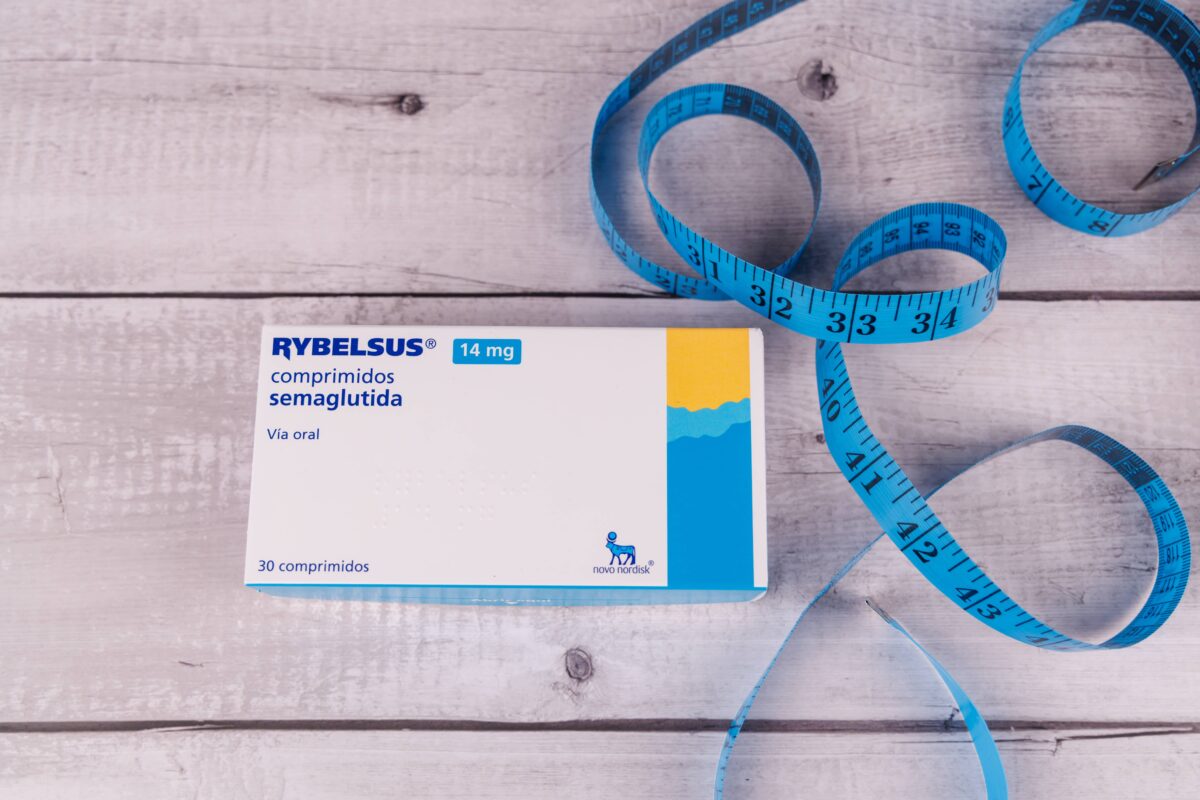
Rybelsus is a brand of oral semaglutide, a tablet rather than an injection. Semaglutide is a GLP-1 receptor agonist, meaning it acts on the receptor for glucagon-like peptide-1, a hormone the gut releases after eating. Activating it prompts insulin release when blood sugar is high, lowers glucagon, and slows how quickly the stomach empties.
According to its Health Canada authorized product monograph, Rybelsus is indicated as an adjunct to diet and exercise to improve glycemic control in adults with type 2 diabetes, and to reduce the risk of major adverse cardiovascular events in that group where cardiovascular disease is established or risk is high.
It is not authorized under 18, and not for type 1 diabetes or diabetic ketoacidosis.
One detail explains most of what follows. Semaglutide is a peptide, and peptides are normally destroyed by digestion, so the tablet is co-formulated with an absorption enhancer called SNAC. Even so, absolute bioavailability is roughly 1 to 2 percent. That narrow margin is why the rules for taking semaglutide pills are so specific.
Rybelsus side effects: what the trials actually reported
The figures below come from the pooled placebo-controlled trials in the Canadian monograph, PIONEER 1 and PIONEER 8. They are proportions of people reporting at least one event, not a prediction for any individual.
| Reported effect | 7 mg | 14 mg | Placebo |
|---|---|---|---|
| Nausea | 11.0% | 19.7% | 6.4% |
| Abdominal pain | 10.1% | 10.7% | 4.1% |
| Diarrhea | 8.7% | 10.1% | 4.1% |
| Vomiting | 6.2% | 8.4% | 3.0% |
| Constipation | 5.9% | 5.3% | 2.5% |
| Reduced appetite | 5.9% | 9.0% | 0.8% |
| Any gastrointestinal reaction | 31.8% | 41.0% | 21.3% |
Two things are worth reading out of that table. The placebo column is not zero, so some of what gets blamed on a new medicine would have happened anyway. And the 14 mg column is higher than the 7 mg column on almost every row, which is the clearest signal in the data that these effects track the dose.
Less common effects in the monograph include indigestion, gastritis, reflux, bloating, burping, fatigue, dizziness, headache, a change in how food tastes, and rises in the pancreatic enzymes amylase and lipase. Heart rate rose by an average of 1 to 3 beats per minute.
One pattern is worth knowing about yourself. The monograph reports that gastrointestinal reactions were more frequent in women and in people with a lower body mass index, and links this to higher drug exposure in those groups. If you are smaller, the same dose may be harder going, and that is pharmacology rather than tolerance.
How long Rybelsus side effects last
The monograph describes the common reactions as generally mild or moderate and of short duration, and notes that most nausea, vomiting and diarrhea occurred during dose escalation rather than steadily throughout treatment. So the difficult stretch tends to be the first weeks on a new dose, easing as the body adjusts.
That is the pattern, not a promise. A meaningful minority did not settle: in the placebo-controlled pool, 4.5 percent of people on 7 mg and 7.9 percent on 14 mg stopped treatment because of digestive effects, compared with 0.6 percent on placebo. If you are eight weeks in on a stable dose and nothing has improved, that is information to bring to your prescriber rather than something to push through.
What changes at each dose step
Dosing is a prescriber’s decision, and the schedule below is the one set out in the monograph rather than advice. Two formulations are now listed, and the newer one delivers the same exposure at a lower milligram number.
| Step | Original formulation | Updated formulation | Purpose |
|---|---|---|---|
| Starting dose | 3 mg once daily | 1.5 mg once daily | Initiation only, for 30 days, not intended for glycemic control |
| First maintenance dose | 7 mg once daily | 4 mg once daily | Maintenance after at least 30 days at the starting dose |
| Second maintenance dose | 14 mg once daily | 9 mg once daily | Only if more glycemic control is needed after at least 30 days |
The escalation exists specifically to reduce stomach symptoms, which is why the starting dose is held for 30 days even though the monograph says it is not intended to control blood sugar on its own. That first month is a tolerance-building step. Two rules sit alongside it: do not take more than one tablet a day or combine tablets to reach a higher dose, and swallow the tablet whole, because it should not be split, crushed or chewed.
Why the empty stomach rule is not optional
This is the part that separates the tablet from most other medicines in the cabinet.
The monograph is specific. Take it on an empty stomach, at least 30 minutes before the first food, beverage or other oral medicine of the day, with no more than half a glass of water, equivalent to 120 mL. Waiting less than 30 minutes is likely to reduce absorption, and so is a larger volume of water.
The practical consequence is not a side effect, it is a missed effect. Getting the timing wrong mostly means less drug absorbed, which shows up as a treatment that does not seem to be working rather than as a symptom you would notice. If you also take other tablets in the morning, including thyroid medication, that 30-minute gap applies to those as well, and the monograph flags levothyroxine specifically as needing thyroid monitoring when the two are taken together. For supplements taken alongside this class of medication, whether NAD+ and GLP-1 medications can be used together covers a common version of that question.
If you miss a dose entirely, the monograph says to skip it and take the next one the following day. Do not double up.
If you want the comparison between the tablet and the injectable form, why some people prefer the tablet covers that ground and this article deliberately does not.
What is normal and what needs a call
Nausea in the first weeks of a new dose, loose stools, a smaller appetite, mild indigestion and tiredness are common and usually settle. Speak with your provider if they are severe, if you cannot keep fluids down, or if they are not improving after several weeks.
Contact a healthcare provider promptly if you have severe and ongoing pain in the stomach area, with or without vomiting, which can radiate to the back. That combination can indicate pancreatitis and needs assessment rather than waiting.
Seek care for jaundice, meaning yellowing of the skin or eyes, or for severe or persistent abdominal pain with fever, which the monograph lists as characteristic symptoms of gallbladder disease.
Get urgent help for signs of a serious allergic reaction, including difficulty breathing, swelling of the face or throat, wheezing, or feeling faint. Also seek urgent care for sudden loss of vision or rapidly worsening eyesight, which the monograph links to a very rare effect called non-arteritic anterior ischaemic optic neuropathy.
Because semaglutide slows stomach emptying, tell any clinician planning a procedure under general anaesthetic or sedation that you are taking it. Pulmonary aspiration has been reported in people on GLP-1 receptor agonists undergoing anaesthesia.
Who should speak with a healthcare provider first
Rybelsus is prescription-only in Canada, so this conversation happens before treatment starts. The monograph lists it as contraindicated in people with a personal or family history of medullary thyroid carcinoma, in people with Multiple Endocrine Neoplasia syndrome type 2, in people who have had a hypersensitivity reaction to it, and during pregnancy or breastfeeding. Semaglutide caused thyroid C-cell tumours in rats and mice at clinically relevant exposures, and whether that applies to humans is unknown.
Tell your prescriber if you have had pancreatitis, gallbladder or liver problems, kidney disease, diabetic retinopathy, a fast heart rate or a heart rhythm condition, or severe digestive problems including gastroparesis. Tell them if you take insulin or a sulfonylurea, because the risk of low blood sugar rises and those doses may need to be reduced first. Tell them if you take a blood thinner such as warfarin, since the monograph recommends frequent monitoring of INR when semaglutide is started.
Frequently asked questions
Is Rybelsus 14 mg discontinued?
The Canadian monograph now lists two formulations: the original 3 mg, 7 mg and 14 mg tablets, and an updated 1.5 mg, 4 mg and 9 mg version that delivers equivalent exposure at a lower number. So 9 mg of the updated tablet corresponds to 14 mg of the original. Ask your pharmacy which one they supply.
What is the usual Rybelsus dose?
The monograph sets a starting dose of 3 mg once daily for 30 days, then 7 mg once daily, increasing to 14 mg only if more glycemic control is needed after at least 30 days at 7 mg. The updated formulation follows the same steps at 1.5 mg, 4 mg and 9 mg. Dosing is a prescriber’s decision.
Can you cut a Rybelsus tablet in half?
No. The monograph says the tablet should be swallowed whole and should not be split, crushed or chewed. It also says not to take more than one tablet a day and not to combine tablets to reach a higher dose. Halving or doubling changes absorption unpredictably and is not a way to manage side effects.
Do Rybelsus side effects go away?
Usually. The monograph describes the common digestive reactions as generally mild or moderate and of short duration, and notes that most occurred while the dose was being increased. A minority do not settle: 4.5 percent on 7 mg and 7.9 percent on 14 mg stopped treatment because of them, so persistent symptoms are worth raising rather than enduring.
Is what people report on Reddit accurate?
Partly. Online accounts describe the same digestive effects the trials recorded, so the pattern is real. What they cannot give you is a denominator, a placebo comparison, or any way to know whether the person posting also had another condition. Use them for what to ask about, and the monograph and your prescriber for what to expect.
What happens if I eat too soon after taking it?
Mostly you absorb less of the dose. The monograph says waiting less than 30 minutes before the first food, drink or other oral medicine is likely to decrease the amount of semaglutide absorbed, as is taking it with more than 120 mL of water. That usually shows up as a treatment working less well, not as a new symptom.
The bottom line
Rybelsus side effects are mostly digestive, mostly mild, and mostly concentrated in the weeks when the dose steps up. That dose relationship is the clearest thing in the trial data, and it is why the escalation schedule exists. The parts worth memorising are shorter than the side effect list: empty stomach, small sip of water, wait 30 minutes, never double up, and treat severe ongoing abdominal pain, jaundice, allergic symptoms or sudden vision changes as reasons to seek care rather than reasons to wait.
Not sure whether this class of medication fits your situation? Start an online assessment and a licensed MyRocky clinician will review your health history, current medications and bloodwork.
References
- Novo Nordisk Canada Inc. RYBELSUS (semaglutide tablets) Product Monograph, including Patient Medication Information. Health Canada authorized product monograph, submission control number 295001. https://pdf.hres.ca/dpd_pm/00082994.PDF
- Aroda VR, Rosenstock J, Terauchi Y, et al. PIONEER 1: Randomized Clinical Trial of the Efficacy and Safety of Oral Semaglutide Monotherapy in Comparison With Placebo in Patients With Type 2 Diabetes. Diabetes Care, 2019;42(9):1724-1732. https://pubmed.ncbi.nlm.nih.gov/31186300/
- Cleveland Clinic. GLP-1 agonists: what they are, how they work and side effects. Cleveland Clinic. https://my.clevelandclinic.org/health/treatments/13901-glp-1-agonists
Disclaimer: This article is intended for informational purposes only and is not a substitute for professional medical advice, diagnosis, or treatment. Always consult your healthcare provider with any questions about a medical condition or treatment.
Editorial Standards: At Rocky Health, we’ve made it our mission to support men and women with trustworthy, easy-to-understand medical and health information online. Read more about our editorial standards here.