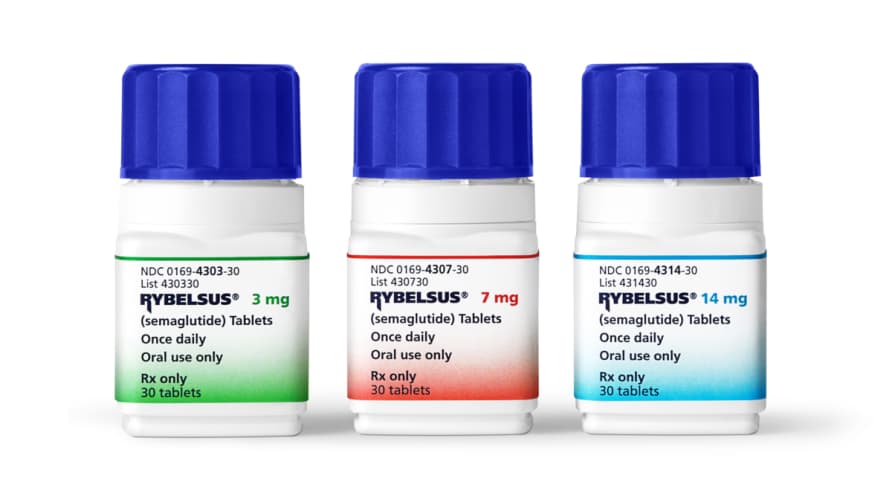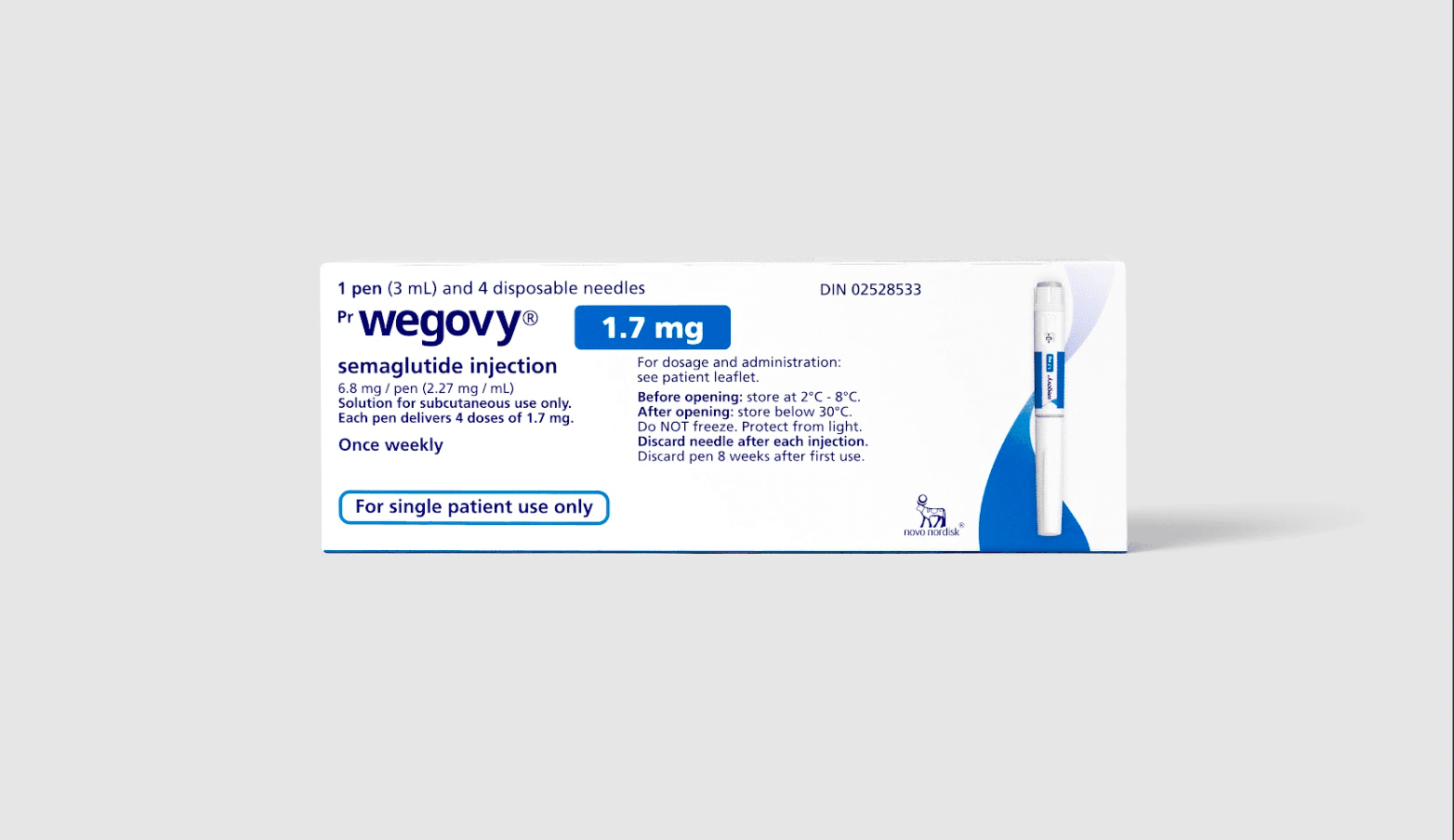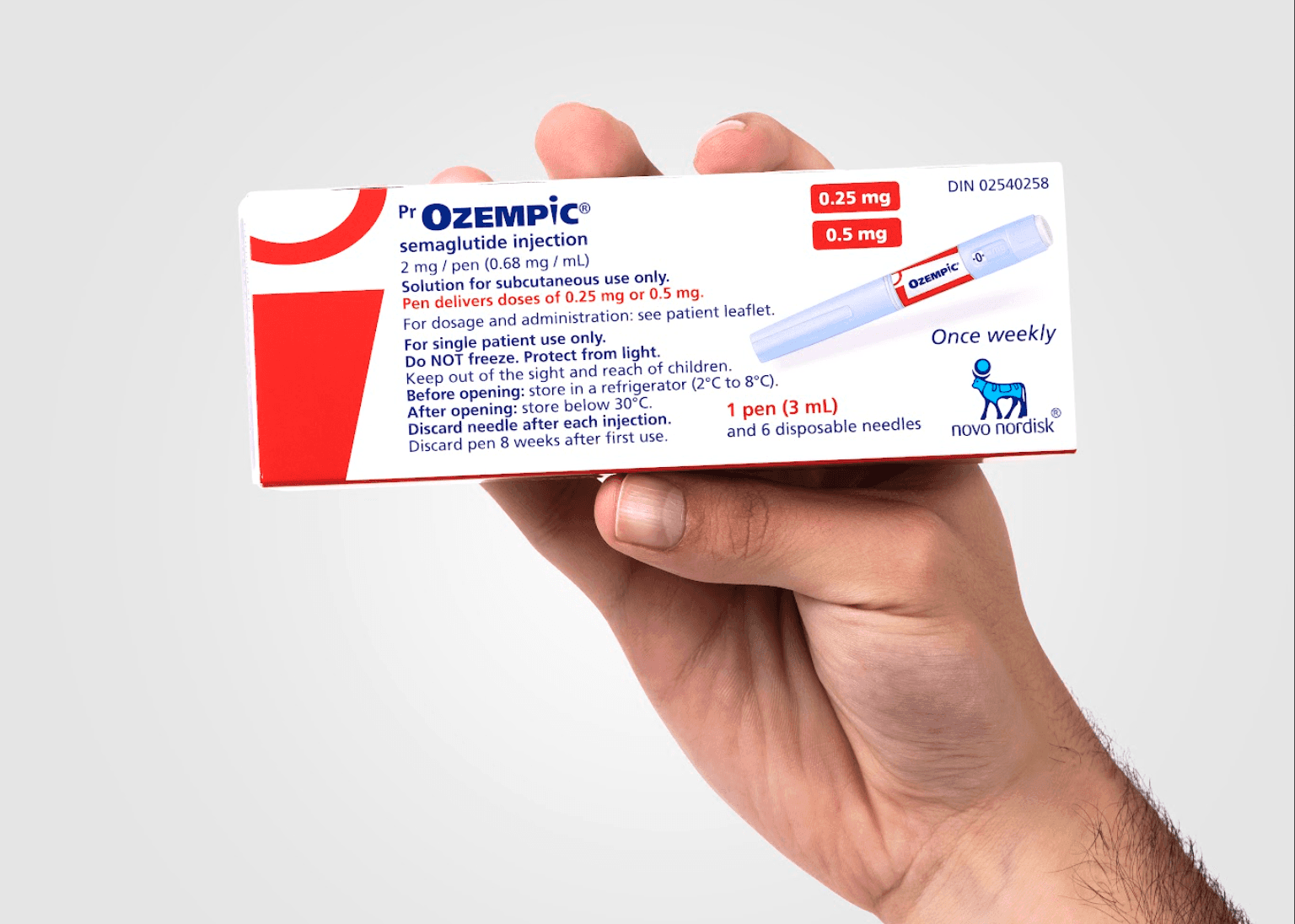



You’ve probably seen the before-and-after photos and the headlines, and come away with less clarity than you started with. Here is the part most coverage skips. GLP-1 in Canada means a specific, regulated group of prescription drugs. They have real evidence behind them and real side effects. And the eligibility rules have nothing to do with how you feel about your body.
Key takeaways
- GLP-1 receptor agonists are a class of prescription medication that mimic a gut hormone your body already makes. That hormone influences appetite, fullness, and how quickly the stomach empties.
- Health Canada has authorized six medications for long-term obesity management. Three of them act on the GLP-1 receptor: liraglutide, semaglutide, and tirzepatide.
- The same active ingredient can be sold under different brand names for different authorized uses. Semaglutide and tirzepatide each have one brand authorized for weight management and a separate brand authorized for type 2 diabetes.
- In clinical trials, average weight reduction over roughly 15 to 18 months ranged from about 15 percent with semaglutide 2.4 mg to about 21 percent with tirzepatide 15 mg.
- Weight tends to return when treatment stops. In a trial extension, participants regained about two thirds of what they had lost within a year of stopping.
- Gastrointestinal side effects are the most common reason people stop. These medications are prescription-only in Canada and require a clinician to review your history first.

What GLP-1 receptor agonists actually are
Glucagon-like peptide-1, or GLP-1, is a hormone your small intestine releases after you eat. It does several things at once. It signals the pancreas to release insulin, it slows how fast food leaves your stomach, and it acts on regions of the brain involved in appetite and fullness.
A GLP-1 receptor agonist is a medication built to activate that same receptor, but for much longer than the natural hormone does. Natural GLP-1 breaks down within minutes. These medications last days.
The practical effect for most people is that they feel full sooner, stay full longer, and think about food less. That last part is the one people are least prepared for and most often describe as the biggest change.
One medication in this group works on two receptors rather than one. Tirzepatide activates both the GLP-1 receptor and the GIP receptor, another gut hormone receptor involved in metabolism. It is often described as a dual agonist for that reason.
GLP-1 in Canada: which medications are authorized
This is where most confusion starts, because the same molecule appears under more than one brand name depending on what it is authorized to treat.
Health Canada has authorized six medications for long-term obesity management: liraglutide, naltrexone with bupropion, orlistat, semaglutide, tirzepatide, and setmelanotide. Only three of those act on the GLP-1 receptor.
| Active ingredient | Class | How it is given |
|---|---|---|
| Liraglutide | GLP-1 receptor agonist | Daily injection |
| Semaglutide (2.4 mg) | GLP-1 receptor agonist | Weekly injection |
| Semaglutide (lower doses) | GLP-1 receptor agonist | Weekly injection |
| Semaglutide (oral) | GLP-1 receptor agonist | Daily tablet |
| Tirzepatide | Dual GIP and GLP-1 receptor agonist | Weekly injection |
| Tirzepatide (separate product) | Dual GIP and GLP-1 receptor agonist | Weekly injection |
| Setmelanotide | Not a GLP-1 agonist | Daily injection |
Two things follow from that table.
First, a medication authorized for type 2 diabetes is not the same product as the one authorized for weight management, even when the active ingredient is identical. The authorized dose, the labelling, and the evidence package Health Canada reviewed are different.
Second, Health Canada has now authorized generic semaglutide injections. In June 2026 it authorized a generic semaglutide injection for chronic weight management in people aged 12 and older, following two earlier generic semaglutide authorizations for type 2 diabetes. Generic entry usually affects price over time, though what any individual pays depends on their coverage.
How well do they work
Honest answer: better than anything that came before them, and not as reliably as the marketing suggests.
The main trials are worth knowing by name, because they are what every claim traces back to.
STEP-1 was published in the New England Journal of Medicine in 2021. Adults with overweight or obesity, and without diabetes, took semaglutide 2.4 mg weekly for 68 weeks alongside lifestyle counselling. Average weight change was 14.9 percent, against 2.4 percent on placebo. About 86 percent of participants lost at least 5 percent of their body weight, compared with about 32 percent on placebo.
In the SURMOUNT-1 trial, published in 2022, adults with obesity or overweight and without diabetes took tirzepatide for 72 weeks. At the 15 mg dose, average weight reduction was about 21 percent, compared with about 3 percent on placebo.
In 2025, SURMOUNT-5 compared the two directly for the first time. It was an open-label trial of 751 adults with obesity and without diabetes. Over 72 weeks, average weight reduction was 20.2 percent with tirzepatide and 13.7 percent with semaglutide. Waist circumference fell by 18.4 cm and 13.0 cm respectively.
Three caveats matter more than the headline numbers.
These are averages, and individual response varies widely. Some people in these trials lost very little. Every trial paired the medication with structured lifestyle support, not medication alone. And the numbers describe what happened while people were taking the drug.
That last point deserves its own paragraph. A STEP-1 extension study followed participants for a year after treatment stopped. They regained about two thirds of the weight they had lost, and most of the improvements in blood pressure and cholesterol drifted back toward where they started. The researchers’ conclusion was that obesity behaves as a chronic condition and that ongoing treatment appears necessary to maintain the result. Anyone deciding whether to start should factor that in from the beginning rather than discovering it later.
Side effects and safety
The most common side effects across this whole class are gastrointestinal: nausea, vomiting, diarrhea, constipation, and abdominal discomfort. In trials, most were mild to moderate and clustered during the period when the dose was being increased.
They are also the most common reason people discontinue. In SURMOUNT-5, gastrointestinal side effects led to stopping treatment in 2.7 percent of the tirzepatide group and 5.6 percent of the semaglutide group.
Less common but more serious risks reported with this class include pancreatitis, gallbladder problems, and, in rodent studies, thyroid C-cell tumours. Whether that rodent finding translates to humans is not established, but it is why these medications carry warnings about a personal or family history of medullary thyroid carcinoma.
These medications are not appropriate for everyone. A clinician needs to review your full medical history and current medications. That includes any history of pancreatitis, gallbladder disease, thyroid cancer, or diabetic retinopathy, and any pregnancy plans.
Who qualifies, and how access works in Canada
Eligibility for weight management medication in Canada is based on body mass index and related health conditions, not on appearance or personal goals.
The thresholds are similar across the authorized products. A BMI of 30 or higher qualifies on its own. A BMI of 27 or higher qualifies if you also have a weight-related health condition. Those conditions include high blood pressure, abnormal cholesterol, prediabetes, type 2 diabetes, obstructive sleep apnea, and cardiovascular disease.
Every one of these medications is prescription-only in Canada. That is not a formality. The assessment determines which option is appropriate, what starting dose to use, how quickly to increase it, and what to monitor.
Coverage is the part that surprises people. Provincial public drug plans generally cover GLP-1 medications for type 2 diabetes and generally do not cover them for weight management. Private plans vary considerably. Many Canadians paying for weight management treatment are paying out of pocket, and cost differs by product, dose, and pharmacy. Ask for the specific cost of the specific product and dose you are prescribed before you start, because prices are not interchangeable across the class.
Want to understand the process before committing to anything? Our guide to considering weight loss medication in Canada covers that decision. Your first 90 days on weight loss medication covers what the early months actually feel like.

Frequently asked questions
What are GLP-1 medications used for in Canada?
GLP-1 receptor agonists are authorized in Canada for two main purposes, depending on the specific product. Some are authorized for type 2 diabetes to help manage blood sugar. Others are authorized for chronic weight management alongside a reduced-calorie diet and increased physical activity. One is also authorized for obstructive sleep apnea in adults with obesity.
Which GLP-1 works best for weight loss?
In the only published head-to-head trial, SURMOUNT-5, tirzepatide produced greater average weight reduction than semaglutide over 72 weeks. That does not make it the right choice for everyone. Tolerability, other health conditions, cost, coverage, and how you respond all factor in, which is why the decision belongs with a clinician.
Are GLP-1 medications covered by provincial health plans?
Generally they are covered for type 2 diabetes and not for weight management. Coverage rules differ by province and change over time. Private insurance coverage for weight management is inconsistent. Check your specific plan rather than assuming.
How long do you need to stay on a GLP-1 medication?
There is no fixed course. Trial evidence suggests weight and cardiometabolic gains largely reverse within about a year of stopping. That is why these are framed as long-term treatments for a chronic condition, not short interventions. Discuss duration with your prescriber before you start.
Can you get GLP-1 medications without a prescription in Canada?
No. All of them are prescription-only. Products sold without a prescription, including compounded or unauthorized versions, have not been reviewed by Health Canada for safety, efficacy, or quality.
The bottom line
GLP-1 receptor agonists are the most effective medications yet authorized in Canada for long-term weight management, and they work best as one part of a supervised plan rather than on their own. The evidence is strong, the side effects are real, and the eligibility rules are clinical.
Want to know whether treatment is appropriate for you? Start an online assessment with MyRocky and speak with a licensed Canadian healthcare provider.
References
- Wilding JPH, Batterham RL, Calanna S, et al. Once-weekly semaglutide in adults with overweight or obesity. N Engl J Med. 2021;384(11):989-1002. https://www.nejm.org/doi/full/10.1056/NEJMoa2032183
- Wharton S, Lau DCW, Vallis M, et al. Pharmacotherapy for obesity management in adults. Canadian Adult Obesity Clinical Practice Guidelines, 2025 update. Obesity Canada. https://obesitycanada.ca/wp-content/uploads/2025/08/11-Canadian-Adult-Obesity-CPG-Pharmacotherapy-2025-update.pdf
- Health Canada. Canada approves first generic semaglutide for weight loss. June 2026. https://www.canada.ca/en/health-canada/news/2026/06/canada-approves-first-generic-semaglutide-for-weight-loss.html
Disclaimer: This article is intended for informational purposes only and is not a substitute for professional medical advice, diagnosis, or treatment. Always consult your healthcare provider with any questions about a medical condition or treatment.
Editorial Standards: At Rocky Health, we’ve made it our mission to support men and women with trustworthy, easy-to-understand medical and health information online. Read more about our editorial standards here.