

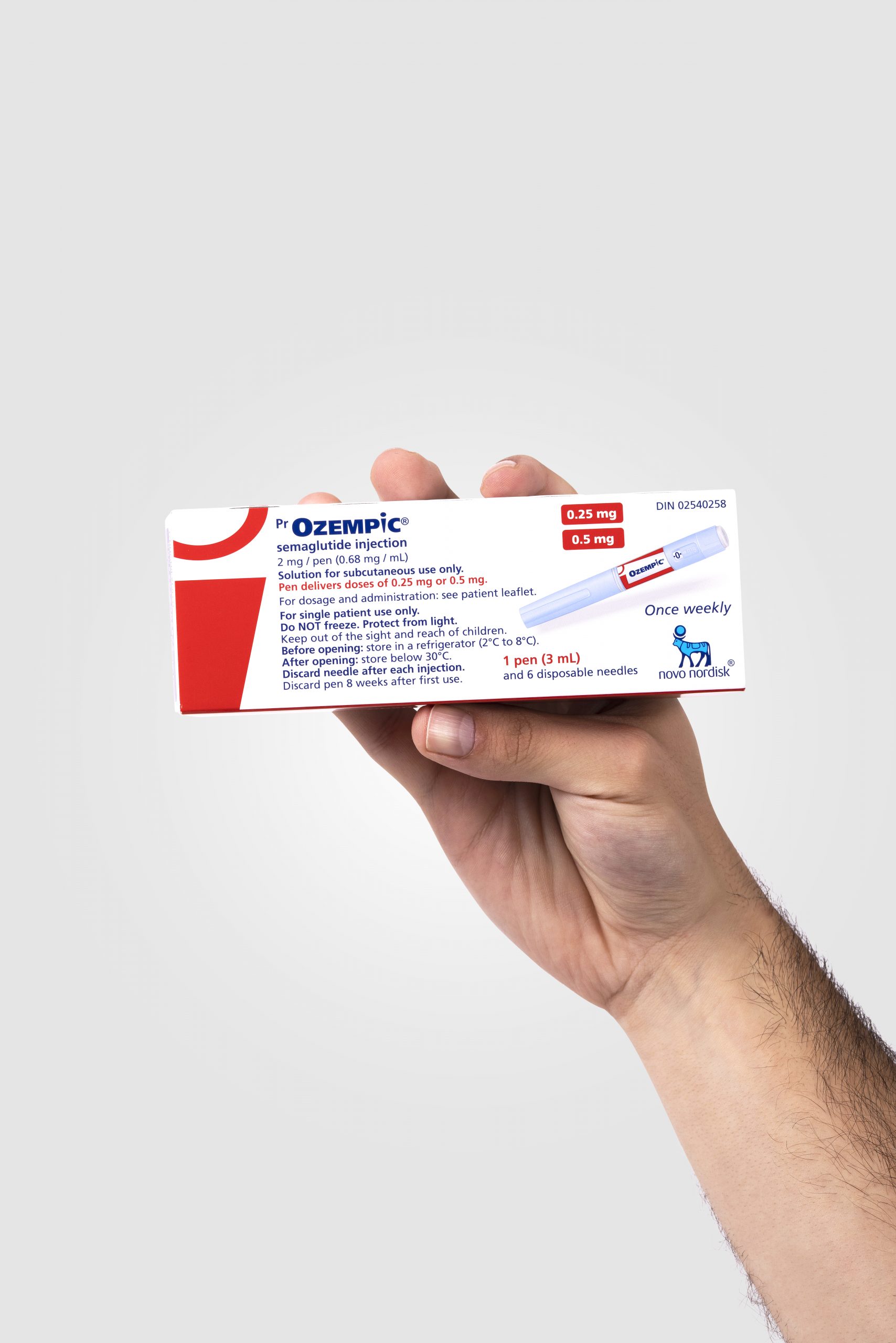
You looked up Ozempic Quebec, found a number somewhere between $250 and $450 a month, and closed the tab without knowing whether any of it applies to you. That number is close to meaningless on its own, because what you pay in Quebec depends less on the medication and more on which insurance plan you are legally required to be in.
Key takeaways
- Quebec is the only province where prescription drug insurance is compulsory. Every resident must be covered, either by a private plan they have access to or by the public plan administered by RAMQ.
- Semaglutide products, including Ozempic, Rybelsus and the authorized generics from Dr Reddy’s and Apotex, appear on the RAMQ list as exception medications. They are not covered automatically.
- Exception status means a prescriber has to request authorization against a recognized payment indication before the public plan pays anything.
- RAMQ has publicly maintained that it reimburses semaglutide for type 2 diabetes, not for weight management.
- Several other GLP-1 receptor agonist products return no result at all in RAMQ’s covered-drug search tool, which is a different situation from being covered with conditions.
- If you are covered under the public plan and your request is authorized, you pay the plan’s monthly deductible plus co-insurance, up to a monthly contribution ceiling, rather than the full pharmacy price.
How prescription drug coverage works in Quebec
Most Canadians can go without drug insurance. Quebec residents cannot.
Under the Act respecting prescription drug insurance, everyone in Quebec has to hold drug coverage. If you have access to a private plan through work, a professional order, or a family member, you are required to take it. If you do not have access to one, you are required to register with the Public Prescription Drug Insurance Plan run by RAMQ.
This matters more than people expect. It means the first question is never whether a drug is covered in Quebec. The real question is which plan you are in, and what that specific plan does with this drug. Two neighbours on the same street can get completely different answers.
For the public plan, the answer is published. RAMQ maintains a List of Medications, updated on a regular schedule, and a public search tool where you can enter a drug or an active ingredient and see its status.
What exception medication status actually means
When you search semaglutide in RAMQ’s tool, the products come back marked as exception medications.
That label is doing real work. A regular listed medication is covered when a pharmacist fills a valid prescription. An exception medication is not. Coverage only applies where the prescriber submits a request and RAMQ authorizes it against a recognized payment indication for that drug.
Three things follow from that.
First, the decision sits with the prescriber and the plan, not with the pharmacy counter. Turning up with a prescription is not the same as turning up with an authorization.
Second, the recognized indication is specific. RAMQ has publicly maintained that it reimburses semaglutide in the context of type 2 diabetes. Requests outside a recognized indication are not authorized simply because a prescription exists.
Third, status can change. The List of Medications is revised on a published schedule, and authorized generics entering the market can shift what is listed. Anything you read about Quebec coverage, including this article, needs to be checked against RAMQ’s current tool before you rely on it.

Ozempic Quebec: what RAMQ covers and what it does not
Here is the part that catches people, and it is the reason this page exists.
As of the verification date below, a search of RAMQ’s covered-drug tool for semaglutide returns four products: the brand-name injectable, the oral tablet form, and two authorized generic injectables. All four are marked as exception medications.
Running the same search for several other medications in the broader GLP-1 and incretin category returns no result. A drug that does not appear on the list is in a different position from one that appears with conditions attached. There is no exception pathway to request, because the product is not listed.
This is the single most common misunderstanding among Quebec residents researching this class of medication. People assume that because these products are frequently discussed together, and because they work through related mechanisms, they must sit in the same place on a provincial formulary. They do not.
The practical version: the fact that a medication is authorized for sale in Canada tells you nothing about whether a provincial plan pays for it. Those are two separate systems making two separate decisions.
What you pay at the pharmacy under the public plan
If you are registered in the public plan and an exception request has been authorized, you do not pay the pharmacy’s full price. You pay the plan’s cost-sharing structure.
For the period from 1 July 2026 to 30 June 2027, RAMQ publishes these parameters:
| Element | Amount |
|---|---|
| Monthly deductible | $21.25 |
| Co-insurance after the deductible | 30% |
| Maximum monthly contribution | $105.25 |
| Maximum annual contribution | $1,263 |
| Annual premium, paid through your tax return | $0 to $789 depending on net family income |
The monthly ceiling is the number most people miss. Once your contribution for a month reaches it, covered drugs cost you nothing further that month. Some groups, including certain people aged 65 or over receiving a high proportion of the Guaranteed Income Supplement, and certain children and people with specified functional impairments, are covered free of charge.
For how this product sits alongside everything else authorized here, see our complete guide to GLP-1 options in Canada. These figures are adjusted every year on 1 July. The premium is separate from what you pay at the counter, and it is collected by Revenu Québec through your tax return rather than at the pharmacy.
Note what these numbers are and are not. They are the parameters of the public plan. They apply to covered drugs. If a medication is not covered for your situation, none of this applies and you are paying the pharmacy’s price.
If you do not qualify for coverage
Plenty of people in Quebec will not qualify, and it is worth being direct about what that means rather than implying a workaround exists.
If you are in a private plan, the plan’s own formulary decides. Employer plans vary widely in how they treat this category. Some cover it with prior authorization, some exclude the category entirely. Your plan booklet or your insurer is the only reliable source, not a general article.
If you are in the public plan and your situation does not match a recognized payment indication, the exception request is not authorized, and you would be paying out of pocket.
There are a few things worth understanding before you make a decision:
- Authorized generic semaglutide injectables from more than one Canadian manufacturer are now listed by RAMQ alongside the brand. Where a generic is available and appropriate, the acquisition cost is generally lower than the originator.
- Different formats exist. Oral and injectable forms of the same active ingredient are not interchangeable, and a provider will tell you whether a format is clinically appropriate before cost enters the conversation.
- Coverage decisions are periodically revisited. A denial today is not permanent, and the RAMQ list is updated on a published schedule.
If you want to understand the full landscape rather than one product, our guide to what oral semaglutide is authorized to do in Canada covers how the formats differ.
Live in Quebec and weighing up a GLP-1? This is the part MyRocky can actually take off your plate. The online assessment runs about ten minutes, a licensed Canadian prescriber reviews it, and you get a straight answer on whether this class of medication is appropriate for you before you spend another evening reading formulary pages. MyRocky is a LegitScript-certified Canadian pharmacy and ships free and discreetly.
Safety and who should speak to a healthcare provider first
GLP-1 receptor agonists are prescription medications. They are not appropriate for everyone, and the decision to start one belongs with a licensed healthcare provider who knows your history.
Speak with a provider before considering this class of medication if any of the following apply to you:
- A personal or family history of medullary thyroid carcinoma, or multiple endocrine neoplasia syndrome type 2
- A history of pancreatitis
- Active gallbladder disease
- Pregnancy, planned pregnancy, or breastfeeding
- Severe gastrointestinal disease, including gastroparesis
- Type 1 diabetes
- Current use of other glucose-lowering medication, because the combination affects hypoglycemia risk
Gastrointestinal side effects are the most commonly reported with this class, including nausea, vomiting, diarrhea and constipation. Serious adverse effects are less common but are documented in the Canadian product monographs for these medications, and your provider should review them with you before you start.
Do not start, stop, or change the dose of a prescription medication based on an article. That includes this one.

Frequently asked questions
Is Ozempic covered in Quebec?
Semaglutide products appear on the RAMQ list as exception medications, which means coverage requires prescriber-initiated authorization against a recognized payment indication rather than applying automatically. RAMQ has publicly maintained that it reimburses semaglutide in the context of type 2 diabetes. Confirm current status in RAMQ’s search tool.
What does exception medication mean on the RAMQ list?
It means the drug is covered only when RAMQ authorizes a request submitted by the prescriber, against a recognized payment indication. Without that authorization, a valid prescription alone does not trigger coverage at the pharmacy.
How much does Ozempic cost in Quebec with RAMQ?
If a request is authorized and you are in the public plan, you pay the monthly deductible of $21.25 plus 30% co-insurance, capped at $105.25 per month and $1,263 per year for the 2026 to 2027 period. Without coverage, you pay the pharmacy price.
Does private insurance in Quebec cover it?
That depends entirely on the individual plan. Private plans set their own formularies and prior authorization rules. Check your plan booklet or contact your insurer directly, because coverage in this category varies widely between employers.
Can someone in Montreal get a prescription online?
Prescribing in Quebec is regulated provincially and requires an assessment by a provider licensed to practise there. Telehealth is permitted within that framework. Availability of any specific service in Quebec should be confirmed directly.
The bottom line
In Quebec, the medication is only half the question. The plan you are legally required to be in decides most of what you pay, and semaglutide sitting on the RAMQ list as an exception medication means authorization comes before coverage. Other medications in the same conversation are not on that list at all, which is a different problem entirely.
The next useful step is finding out which plan applies to you and what it says, then talking to a provider about whether this class of medication is clinically appropriate.
To work out what fits your situation, see MyRocky’s semaglutide treatment options or read about the semaglutide formats available in Canada. You can also start an online assessment with a licensed Canadian prescriber.
Coverage status verified against the RAMQ covered-drug search tool and published rate schedule on 30 September 2026. RAMQ updates its List of Medications on a regular schedule and adjusts plan rates annually on 1 July. Confirm current status before acting on anything in this article.
References
- Régie de l’assurance maladie du Québec. Find out whether a drug is covered. RAMQ, 2026. https://www.ramq.gouv.qc.ca/en/citizens/prescription-drug-insurance/find-out-whether-a-drug-covered
- Régie de l’assurance maladie du Québec. Rates in effect, 1 July 2026 to 30 June 2027. RAMQ, 2026. https://www.ramq.gouv.qc.ca/en/citizens/prescription-drug-insurance/rates-effect
- Régie de l’assurance maladie du Québec. List of medications. RAMQ, 2026. https://www.ramq.gouv.qc.ca/en/about-us/list-medications
Disclaimer: This article is intended for informational purposes only and is not a substitute for professional medical advice, diagnosis, or treatment. Always consult your healthcare provider with any questions about a medical condition or treatment.
Editorial Standards: At Rocky Health, we’ve made it our mission to support men and women with trustworthy, easy-to-understand medical and health information online. Read more about our editorial standards here.